Back in the prelapsarian days when the word ‘corona’ innocently indicated a crisp accompaniment to a summer’s evening, I lived around the corner from an old boarded-up pub opposite the bus station on Camberwell New Road. It seemed wasteful that a wonderfully located and stylish old boozerhad been forced into an early retirement. ‘Someone should make something of that’, I’d think cycling past. And thankfully, they have.
In this case, ‘someone’ is good friends Joe Sharratt and Teddy Roberts (previously of Brixton’s Naughty Piglets), and ‘something’ is The Bear – a thriving home of food, music, and infectious bonhomie. Before you ask, it does predate its fictional Chicagoan namesake and, on my visit, I didn’t witness a single temper tantrum or bicep-boosting bleached white t-shirt. Shame. Nevertheless, some similarities d0 exist between the two ursine-inspired establishments. Head-chef Sharratt is determined to produce a menu of uncomplicated but memorable food, there is a real family feel to the team in the kitchen, and the reanimated pub is quickly becoming embedded in the community that sustains it.
On entering, I first noted the telltale signifiers of a hipster-hangout: a vinyl player spinning Teddy’s substantial personal record collection, locally brewed beers ready to be sipped by a bearded brother and a minimalist interior complete with trendy but uncomfortable chairs which look like they may have been stolen from a nearby school. The Bear is, however, full of surprises, and beyond the bar, through a small corridor, is an intimate counter where twelve lucky gourmands can enjoy Sharratt’s exquisitely crafted grub cooked right in front of their eyes.
Influenced by David Chang’s Momofuku Ko, The Bear plays smartly with its limitations. The kitchen team run the whole show; they set up, take orders, talk to customers, and eventually, cook. One of the chefs, Aaron, described the approach to me as the gastronomic equivalent of Johan Cruff’s ‘Total Football’ – roles are fluid, technical ability is high, and the outcome is a truly gratifying dining experience.
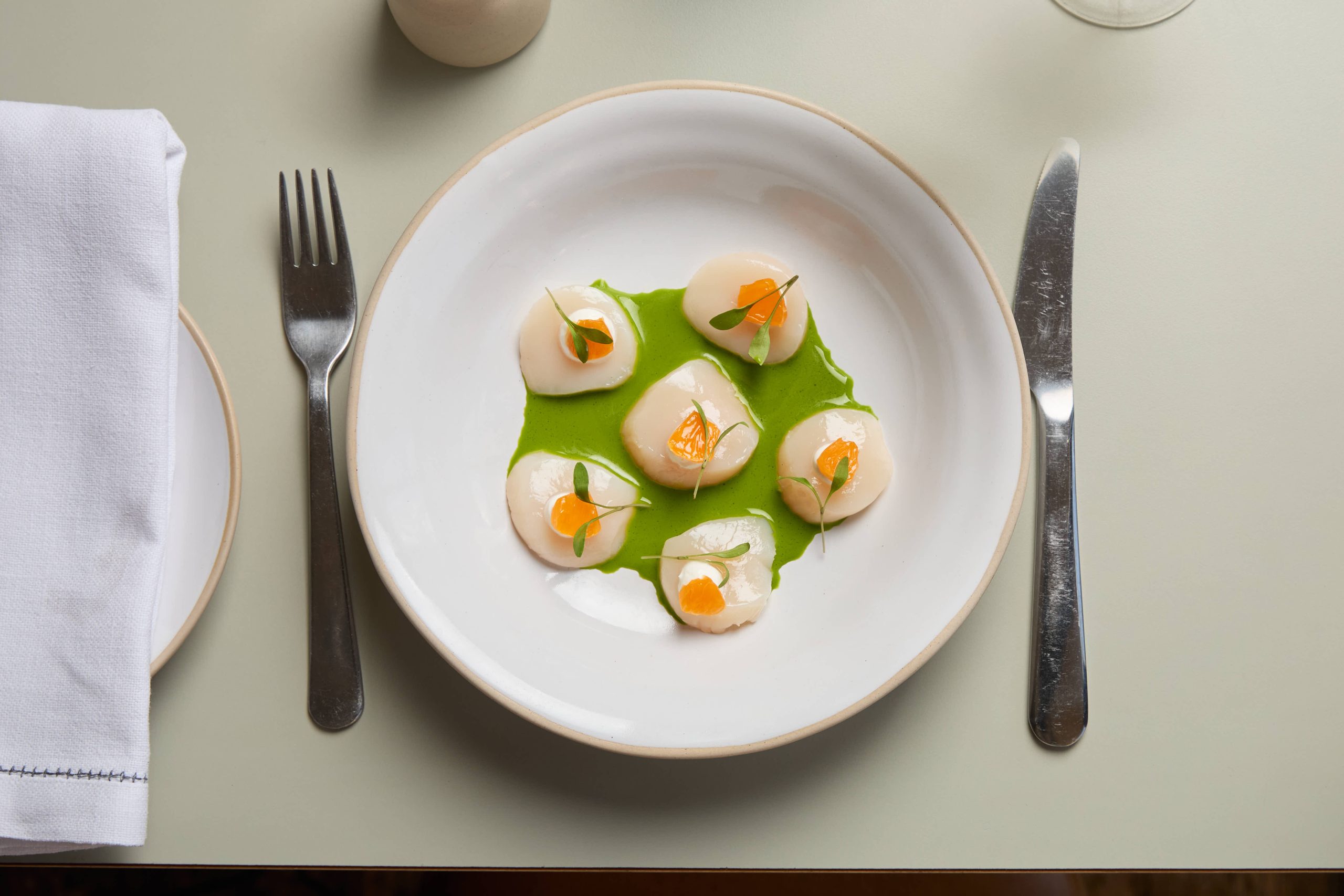
I arrived just before their fully-booked service started, but Joe managed to whip me up some food and talk me through the evolution of the menu. I began with cod’s roe served on my favourite delivery vehicle: potato fried in duck fat. It was as salty, rich and moreish as you’d expect, balanced by pickled cucumber and the tang of malt vinegar. Washed down with a cool beer and soothed by the distant groove of Teddy’s beats, I moved onto the Devon crab. Served with yuzu, pickled cabbage and a peanut sauce containing both the sophisticated zing of a satay and the nostalgia of smooth peanut butter, it was a delicate continuation of the meal.
Joe, now setting up tables for service, recommended I chose the BBQ pork belly,describing the dish as a perfect example of The Bear’s cleverly considered style. For ‘total cooking’ to work, the food must be meticulously prepped, and the final assembling of the plate that you observe from your comfortable seat is just the tip of the iceberg. The pork on my plate had been salted, steamed and pressed over two days, before being flash-friedand eaten by an increasingly sated and content customer. To finish, donuts, rolled in sugar, and dipped in mascarpone and a plum coulis – they could only be improved if they offered refills.
The chefs appeared right at home in their contained kitchen. All four of them live within ten minutes of the pub and emphasized how they’ve already attracted a core group of ‘regulars’. To complete the ever more wholesome picture, Aaron’s mum even provides the fig leaves for their panna cotta. Sharratt emphasised that the pub is still a work in progress, and still requires imagination and flexibility, but seeing these processes feels like part of the experience when you visit The Bear. I can see it becoming a staple for hungry South Londoners – and may even entice the nobility from north of the river too.
The word conviviality literally means ‘feast together’, and these linguistic roots reveal the primacy of food in community. The best food is often about transformation – not just of component ingredients being made into a meal, but of the spaces it elevates and the people it feeds. A disused pub is now filled with people, connecting local businesses, hosting events, playing music, and serving great food. Perhaps someone should make a TV show about it.