
Charlotte Street is home to one of my earliest memories of gastronomic ecstasy: tasting clams and suckling pig for the first time at Fino. When I heard Lisboeta was opening there, my interest was so clearly piqued, it was as if my body knew that this corner of London would again become host to an ensemble of Iberian pleasures.
Yes, Lisboeta is a pleasure factory from start to finish. Every dish is poised and well-balanced, yet generous and flavour-forward. It is all flair and no frippery.
An order should begin with the luscious whipped pork fat spread over Coombeshead sourdough; the empada – a delightful little pie filled with explosive vindaloo pork; and the savoury pastel de natas, topped with a shiny tartar of red prawn. Wash it all down with Tiny Bubbles, a Portuguese traditional method sparkling wine – made just for the restaurant – that has as much verve as a James Brown performance.
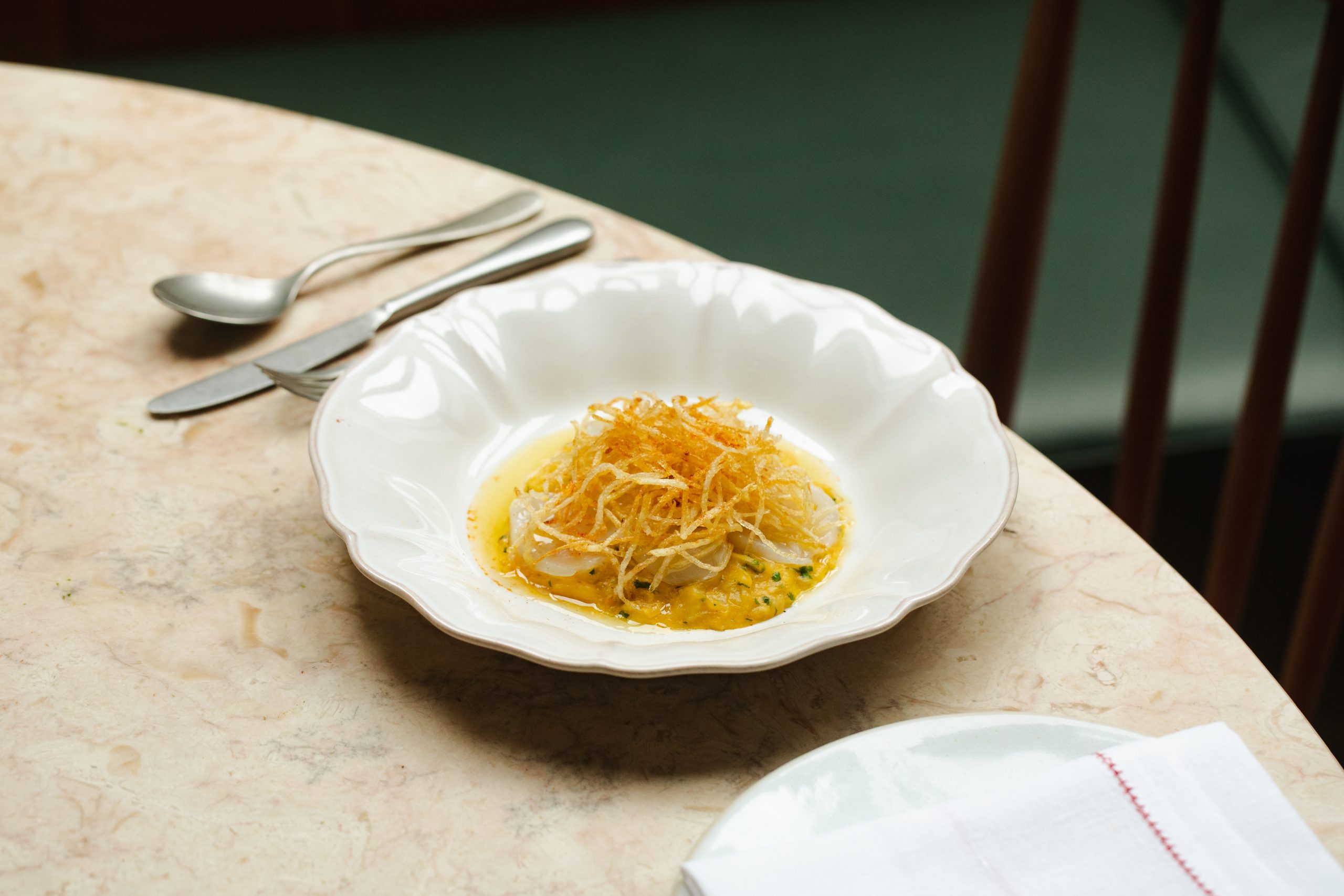
Deciding what comes next won’t be easy. Every dish on the menu sounds mouthwatering, but three to consider are: the signature red prawn rice, which is laced with an umami depth of concentrated crustaceous flavour; bacalhau à brás made using British cod salted in-house and mantled in crunchy shoestring potatoes; and the grilled ibérico pork pluma with a tangy red pepper sauce. The one not to miss is the cataplana, a masterly creation featuring tender pieces of monkfish swimming in a thickened – and gobsmackingly tasty – broth of turmeric, coriander and potato.
By this point, you will have inevitably eaten too much, but you can’t leave Lisboeta without trying the mind-blowing desserts. The abade da priscos – an admittedly divisive dish – is an egg yolk and pork fat custard served with a port caramel. It is as smooth as silk and as unreservedly unctuous as it sounds. The pão de ló – which you can order with additional black truffle when in season – exudes generosity, and is topped with a sprinkle of Maldon sea salt that ties it all together to climatic effect.
Lisboeta looks the part too, with a warm and embracing colour scheme, characterful details everywhere you look and a lively, palpable buzz. It has an energy that is rare to find in London – perhaps an appropriate point at which to mention my ever-growing interest in a restaurant’s capacity to exhibit a sense of place. I think this comes down to the combination of two qualities: research and character. The latter may be organically derived from the personalities behind the restaurant, but without engaged research into the place, time, or spirit it’s trying to convey, character can feel too wild and loose, making storytelling tricky. Hyper-regionality and genre-focused restaurants are one obvious way to give a concept depth, but anchoring a restaurant around a whole city encourages unprecedented streams of imagination; cities are, after all, where dreams are made.
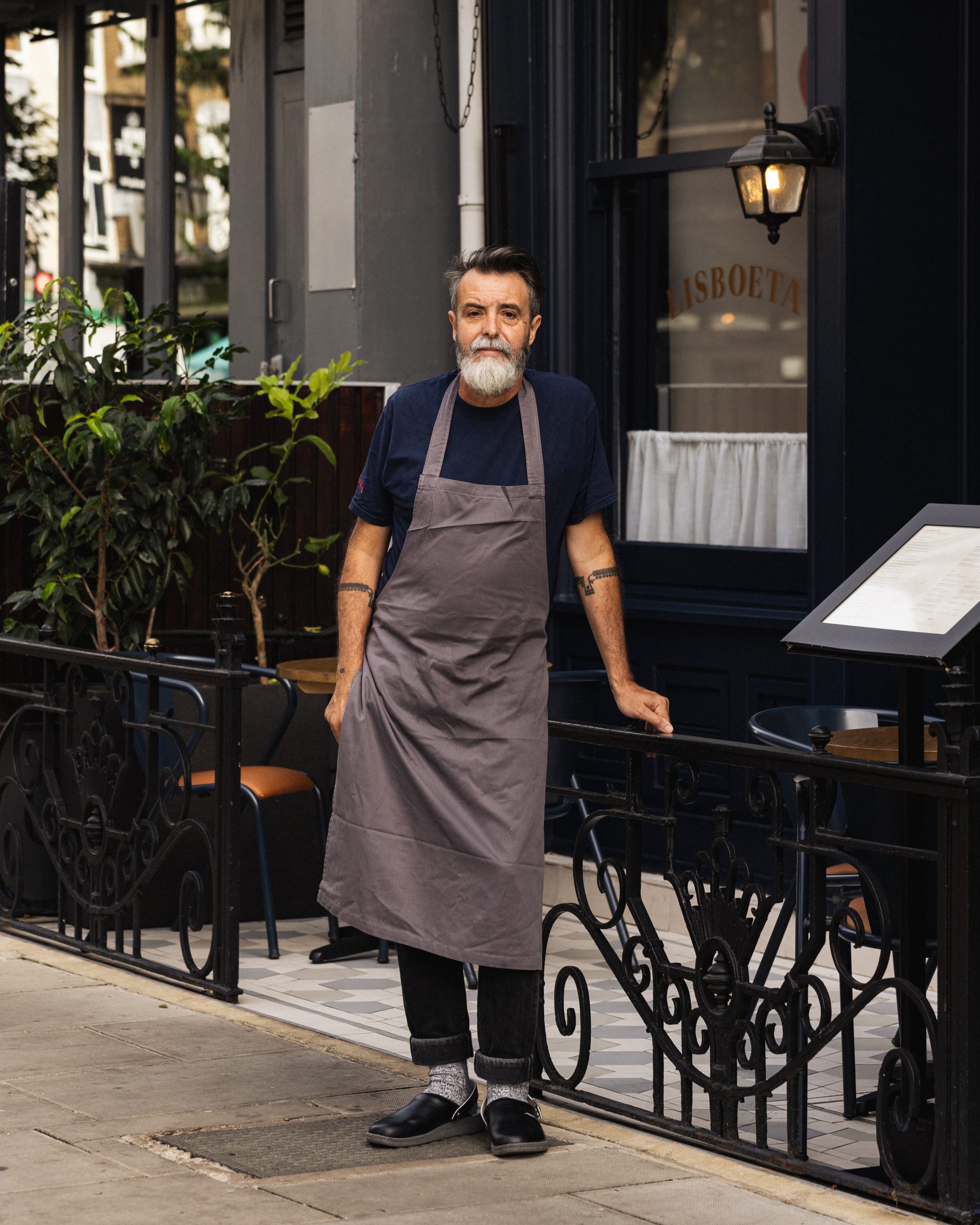
The long-time vision of Nuno Mendes, I asked him to pin down how his restaurant expresses Lisbon’s diverse food culture. ‘The menu combines dishes of my childhood and dishes that I still find in Lisbon today. There are a lot of historical references, but it’s also representative of the culinary movements that are happening today.’
Representing Lisbon’s traditions is done ‘in a liberal way,’ he clarifies. ‘We give it our own layers and make it unique to Lisboeta.’ He cites the aforementioned prawn pastel de nata, and the mushroom açorda – also excellent – as good examples of this. ‘We want to celebrate Lisbon, but also London as a capital for eclectic food concepts,’ he adds.
If Lisboeta were just a simulacrum of a Lisbon restaurant, it may lack character, and if it wasn’t the result of comprehensive research, it would lack sincerity. Lisboeta has an identity because it dares to speak its own voice while being firmly rooted in Mendes’ memories of the city he grew up in; a love letter to Lisbon spoken in its own London accent. ‘What’s really nice is that it’s not in Lisbon, it’s just evocative of Lisbon,’ is how he puts it. ‘You’d have to be more specific in Lisbon, but because we’re far away we can break rules and do things a bit differently.’


